Showing posts with label Legacy. Show all posts

Saturday, January 27, 2024

Senior DeMolay Henry Edward "Hank" Stickney: A Remarkable Life of Service, Entrepreneurship, and Philanthropy

In the annals of American entrepreneurship, there are individuals whose life stories inspire us all. Henry Edward "Hank" Stickney, born on November 8, 1932, in Cleveland, Ohio, was one such exceptional individual whose journey left an indelible mark on various fields – from the military to healthcare, minor league baseball, and entertainment. He passed away on October 17, 2017, after a valiant battle with malignant melanoma, leaving behind a legacy that continues to inspire and resonate.

A Military Career of Distinction

Hank Stickney's journey began with a commitment to serve his country. He joined the United States Air Force, where he served with honor and dedication for 21 years. Rising to the rank of Colonel, he undertook various roles as a pilot and intelligence officer. His military service laid the foundation for qualities that would define his future endeavors – leadership, discipline, and unwavering commitment.

Entrepreneurship in Healthcare

After his distinguished military career, Hank embarked on an entrepreneurial journey that would make a significant impact on the healthcare industry. He founded Western Medical Specialties, a business focused on serving hemophilia patients at home. It was during this time that he developed Factor 7, a crucial blood clotting agent that improved the lives of countless individuals.

A Baseball Visionary

Hank Stickney's entrepreneurial spirit extended beyond healthcare into the realm of sports. He became the CEO of Mandalay Baseball Properties and Dillstar Productions, Inc. Under his leadership, he operated multiple minor league baseball franchises, including the Dayton Dragons, the Shreveport Swamp Dragons, and the Las Vegas 51s. His passion for baseball was evident in the success and innovation he brought to these franchises, with the Dayton Dragons' stadium receiving recognition as one of the most beautiful and successful in the country.

A Leader in Entertainment and Philanthropy

Hank's entrepreneurial pursuits weren't limited to baseball; he also ventured into the world of entertainment. As the owner of Dillstar Productions, he introduced audiences to memorable experiences like Joey & Maria's comedy Italian Wedding.

Hank Stickney's commitment to philanthropy was equally remarkable. He made substantial contributions to the fields he was passionate about, leaving a lasting impact on the communities he served.

A Proud DeMolay

Throughout his life, Hank Stickney remained committed to values instilled in him during his formative years. He was a past Grand Master of DeMolay International, an organization that played a pivotal role in shaping his leadership and public speaking skills. His dedication to DeMolay was evident in his initiation of the Thomas Jones Chapter in Ohio in 1948.

Honors and Legacy

Hank Stickney's remarkable achievements did not go unnoticed. He received numerous accolades during his lifetime, including the Ernst & Young's Entrepreneur of the Year Finalist Award in 2001 and Inc. Magazine's Entrepreneur of the Year in 1986. He was inducted into the Hall of Fame alongside luminaries like Walt Disney, a testament to the lasting impact of his contributions.

In a life filled with diverse accomplishments, Hank Stickney's legacy continues through his family and the many lives he touched. He was a dedicated family man who raised three children, all of whom achieved remarkable success. His entrepreneurial spirit, dedication to service, and philanthropic endeavors continue to inspire generations to come.

Sunday, January 7, 2024

The only ACTIVE DeMolay to Receive an Olympic Gold Medal


In the world of sports, only a few individuals manage to etch their names in history with remarkable achievements. Robert Bruce Mathias was one such extraordinary figure. Born on November 17, 1930, in Tulare, California, Mathias left an indelible mark on both the athletic and political landscapes of the United States.

Early life and Athletic Career

Mathias's journey to greatness began in his hometown of Tulare. Raised in a family with partial Greek lineage, he attended Tulare Union High School, where he formed lasting friendships, including one with Sim Iness, the 1952 Olympic discus gold medalist. However, it wasn't until 1948, during his high school years, that Mathias discovered his passion for the decathlon.

This revelation came about thanks to his track coach, Virgil Jackson, who suggested he try the decathlon. Little did Mathias know that this decision would lead him to the world stage. In the summer following his high school graduation, he qualified for the United States Olympic team for the 1948 Summer Olympics held in London.

Despite his initial lack of experience, Mathias displayed incredible determination and perseverance. He faced challenges, including unfamiliarity with the shot put rules and a near-foul in the high jump. However, he overcame these obstacles and went on to secure the Olympic gold medal, becoming the youngest gold medalist in track and field at the age of 17.

Mathias's success continued in the years leading up to the 1952 Summer Olympics in Helsinki. He won the James E. Sullivan Award in 1948, recognizing him as the nation's top amateur athlete. Mathias's athletic achievements were even more remarkable considering that he spent a year at The Kiski School, a boarding school, to improve his scholastic record.

Enrolling at Stanford University in 1949, Mathias played college football for two years and was a member of Phi Gamma Delta fraternity. In 1950, he set his first decathlon world record, and he led Stanford to a Rose Bowl appearance in 1952.

After earning his degree in Education in 1953, Mathias joined the U.S. Marine Corps, achieving the rank of captain during his service. His remarkable decathlon skills culminated in the 1952 Olympics in Helsinki, where he secured another gold medal, setting a new world record and becoming the first person to successfully defend an Olympic decathlon title.

Mathias retired from athletic competition after the 1952 Olympics but continued to contribute to the world of sports. He served as the first director of the United States Olympic Training Center from 1977 to 1983.

Political Career

Beyond his athletic endeavors, Mathias ventured into politics. Between 1967 and 1975, he served four terms in the United States House of Representatives as a Republican, representing California's northern San Joaquin Valley. Mathias's political career overlapped with Ronald Reagan's two terms as governor of California.

During his time in Congress, Mathias won re-election three times but faced a significant challenge in 1974 when his district was redrawn. Although he narrowly lost his bid for re-election in 1974, he continued to serve in government roles, including as the deputy director of the Selective Service from June to August 1975 and as a regional director in Gerald Ford's 1976 presidential election campaign.

Legacy and Remembrance

Robert Bruce Mathias's legacy extended beyond the realms of sports and politics. His remarkable journey, from an inexperienced high school athlete to a two-time Olympic gold medalist and a congressman, inspired many. Mathias passed away on September 2, 2006, after battling cancer. He was survived by his family, leaving behind a lasting legacy of dedication, perseverance, and achievement.

Mathias's own words capture the essence of his remarkable life: "My experiences in DeMolay most certainly were greatly beneficial in my career in sports, politics, and now, in the business world. I am grateful that DeMolay helped me learn many important values that have always remained with me."

Robert Bruce Mathias remains an enduring example of what can be achieved through dedication, hard work, and the values instilled by organizations like DeMolay. His story continues to inspire generations to pursue their dreams and make a lasting impact on the world.

Tuesday, January 2, 2024

From DeMolay Chapter Scribe to Grand Master of Masons: Samuel C. Williamson

The life of Samuel C. Williamson is a testament to the transformative power of organizations like DeMolay and Freemasonry in shaping young men into leaders of character and integrity. Samuel's journey is marked by a remarkable commitment to these institutions, along with significant accomplishments in both the DeMolay and Masonic communities.

Born on February 26, 1932, in Turtle Creek, Pennsylvania, Samuel C. Williamson embarked on his educational journey, eventually earning a Bachelor of Science degree from the University of Pittsburgh in 1950. His early years laid the foundation for a lifetime dedicated to education, service, and leadership.

In 1952, Samuel took a significant step in his life by joining the United States Army, demonstrating his commitment to serving his country. It was during this period that he began to understand the importance of discipline, honor, and the values that would later become synonymous with his name.

Following his military service, Samuel C. Williamson embarked on a distinguished career with the United States Steel Corporation, where he worked tirelessly from 1952 to 1983. His role as Superintendent of the Chemicals Department at Clairton Works exemplified his dedication to excellence and leadership in the corporate world.

However, Samuel's impact extended far beyond the realm of corporate success. His commitment to community and public service was exemplified during his tenure on the Pitcairn Borough Council from 1967 to 1973, where he played a pivotal role in local governance.

Samuel's dedication to his faith and the church community was evident in his involvement with the Center Avenue United Methodist Church, where he actively contributed to the spiritual well-being of those around him.

Yet, it is in the realms of DeMolay and Freemasonry that Samuel C. Williamson's legacy shines most brilliantly. He was initiated into DeMolay on September 28, 1945, in McKinley Chapter, Turtle Creek, Pennsylvania. Little did he know that this initiation would set the stage for a lifetime of devotion to the organization.

His journey in DeMolay was marked by significant milestones. Samuel served as the Executive Officer of DeMolay in Pennsylvania from 1987 to 2000, leaving an indelible mark on the organization. His commitment to the youth of DeMolay was further underscored by his role as Grand Treasurer of DeMolay International from 1996 to 2002, where he managed the financial affairs of the organization with unwavering dedication.

One of Samuel's crowning achievements in the realm of Freemasonry was becoming the Right Worshipful Grand Master of Masons in Pennsylvania from 1982 to 1983. This prestigious role signified the pinnacle of his Masonic journey, where he led the fraternity with wisdom and distinction.

Furthermore, Samuel C. Williamson's contributions to Masonic youth were exemplified by his role as the Founder and Chairman of the Pennsylvania Masonic Youth Foundation in 1982. His commitment to nurturing the future leaders of Freemasonry was unwavering, as he recognized the importance of guiding and mentoring the younger generation.

Samuel's impact extended beyond the borders of Pennsylvania, as he served as the Chairman for the Conference of Grand Masters of North America from 1982 to 1983. His leadership and vision resonated with Masonic leaders from across the continent, further solidifying his status as a respected figure in the Masonic world.

His dedication to the Scottish Rite was acknowledged with his elevation to the 33rd Degree in the Valley of Pittsburgh in 1977, marking a significant achievement in his Masonic journey.

Throughout his life, Samuel C. Williamson received numerous accolades and awards for his outstanding service to both DeMolay and Freemasonry. These include the Grand Lodge of Pennsylvania Franklin Medal in 1984, the Grand Lodge of New Jersey Daniel Coxe Medal in 2005, and the Grand Lodge of Pennsylvania HODEGOS Award for Service to Youth in 2005.

In 2015, he was honored with the Sovereign Grand Commander's Distinguished Service Medal, a testament to his exceptional contributions to the Scottish Rite. The DeMolay International Grand Cross in 2002 and the Rainbow Grand Cross of Color further showcased his dedication to Masonic youth.

Samuel C. Williamson's initiation into DeMolay and Freemasonry in 1945 marked the beginning of a journey filled with dedication, leadership, and service. His remarkable legacy continues to inspire generations of DeMolay members and Masons, reminding us of the transformative power of these organizations in shaping individuals into outstanding leaders and citizens. Samuel C. Williamson's name will forever be etched in the annals of DeMolay and Freemasonry, a shining example of unwavering commitment and service.

Monday, January 1, 2024

The Original Nine DeMolay: Pioneers of a Lasting Legacy

The history of the Order of DeMolay is intrinsically tied to the nine original founders, whose dedication and vision birthed an organization that has influenced the lives of countless young men. These nine individuals, each symbolized by a pearl in the DeMolay crest, laid the cornerstone for an enduring legacy. As we delve into the lives of these remarkable men, we gain insight into the profound impact they had on the organization and its values.

Ivan M. Bentley: 

The First DeMolay Ivan Merritt Bentley holds the distinction of being the very first DeMolay, initiated on March 18, 1919. Tragically, his life was cut short in an accident in 1921, making him the first to transition from a pearl to a ruby in the emblem.

Louis G. Lower:

The First Active DeMolay Legionnaire Louis G. Lower, the first DeMolay and the inaugural Active DeMolay Legionnaire (LOH), was a pivotal figure in the organization's early days. His tragic death in 1943, resulting from an intoxicated security guard's actions, marked the second transition of a pearl to a ruby.

Edmund Marshall: 

The Scholar and President Edmund Marshall, a Chevalier crowned in 1920, graduated from the University of Missouri and rose to become President of the Kansas City Board of Trade. His passing in 1966 marked the fourth pearl's transformation into a ruby.

Clyde C. Stream: 

The Technical Engineer Clyde C. Stream, a technical engineer with the Sagano Electric Company, retired to Bradenton, Florida, after a successful career. His passing in 1971 led to the fifth pearl becoming a ruby.

Gorman A. McBride: 

The First Master Councilor Gorman A. McBride, the second Obligated DeMolay and the first Master Councilor of the Mother Chapter, had a remarkable career as a lawyer and director of activities at ISC Headquarters. His death in 1973 signified the sixth transition from pearl to ruby.

Ralph Sewell: 

The Musician Ralph Sewell, a skilled pianist and organist, became the Credit Manager for H. D. Lee Mercantile Company, known for Lee jeans. His passing in 1976 resulted in the seventh pearl's transformation into a ruby.

Elmer V. Dorsey: 

The Successful Businessman Elmer V. Dorsey, a successful businessman, later moved to Texas, where he served as an Advisor to the Richardson Chapter. His passing in 1979 denoted the eighth pearl's transformation into a ruby.

William W. Steinhilber:

The Stock and Bond Broker William W. Steinhilber, captain of the first DeMolay baseball team and a prosperous stock and bond broker, passed away in 1992, changing the ninth pearl into a ruby.

Jerome Jacobson: 

The Lawyer and Financier Jerome Jacobson, a distinguished lawyer and financier, lived his entire life in Kansas City. His passing in 2002 marked the final transition from pearl to ruby, symbolizing the completion of the transformation.

The Heart of DeMolay Dad Frank Land, the founder of DeMolay, represented the third ruby on the DeMolay crest. His indomitable spirit and dedication to the organization persisted even as he battled the effects of scleroderma. Dad Land's unexpected passing in 1959 left an indelible void, reminding us annually on November 8 to honor his memory.

The legacy of these nine pioneers is etched into the very fabric of DeMolay. Without their vision, dedication, and unwavering commitment, the organization would not exist. As we remember their contributions, we pay homage to the founders who paved the way for generations of young men to embrace the values of character, leadership, and service that continue to define the Order of DeMolay.

Sunday, December 31, 2023

Notable DeMolay Alumni: Shaping a Legacy of Leadership

The Order of DeMolay, an international youth organization dedicated to developing young men into leaders and responsible citizens, has a rich history of notable alumni who have gone on to achieve remarkable success in various fields. These individuals, who once wore the DeMolay emblem with pride, exemplify the organization's core values of leadership, integrity, and community service. In this article, we will explore some of the most prominent and influential DeMolay alumni and their enduring impact on society.

  1. Walt Disney

Walt Disney, the legendary creator of Disneyland and co-founder of The Walt Disney Company, was an active DeMolay member during his youth in Missouri. Disney's creativity, innovation, and commitment to dreams have left an indelible mark on the world of entertainment.

  1. John Wayne

The iconic American actor known for his roles in Western films, John Wayne, was a DeMolay member in Glendale, California. Wayne's career spanned six decades, and his contributions to the film industry continue to inspire generations of actors.

  1. Mel Blanc

Mel Blanc, the "Man of a Thousand Voices" and the voice behind many beloved cartoon characters, was a DeMolay member in Portland, Oregon. His iconic voice work includes Bugs Bunny, Daffy Duck, and many more.

  1. Bill Clinton

The 42nd President of the United States, Bill Clinton, was an active DeMolay member during his youth in Arkansas. Clinton's leadership in American politics and philanthropy has had a significant impact on both national and global scales.

  1. John Steinbeck

Renowned author John Steinbeck, famous for works such as "The Grapes of Wrath" and "Of Mice and Men," was a DeMolay member in Salinas, California. His literary contributions earned him a Nobel Prize in Literature.

  1. Bob Mathias

Olympic decathlon champion and former Congressman Bob Mathias was a DeMolay member in Tulare, California. His athletic achievements and dedication to public service continue to inspire young athletes and leaders.

  1. John Jacob Astor IV

John Jacob Astor IV, a prominent businessman, inventor, and author, was a DeMolay member in New York City. Astor's entrepreneurial spirit and contributions to early 20th-century America are noteworthy.

  1. Fran Tarkenton

Former NFL quarterback Fran Tarkenton, known for his exceptional football career with the Minnesota Vikings, was a DeMolay member in Athens, Georgia. Tarkenton's leadership on and off the field has left a lasting legacy in sports.

  1. Walter Cronkite

Walter Cronkite, the iconic news anchor often referred to as the "Most Trusted Man in America," was a DeMolay member in Kansas City, Missouri. His journalism career set the standard for integrity in reporting.

  1. Mark Harmon

Actor Mark Harmon, famous for his roles in "NCIS" and "St. Elsewhere," was a DeMolay member in Burbank, California. His contributions to television and entertainment have made a lasting impact.

  1. Neil Armstrong

Neil Armstrong, the first human to set foot on the moon during NASA's Apollo 11 mission, was a DeMolay member in Wapakoneta, Ohio. His historic achievement in space exploration has inspired generations worldwide.

Conclusion

The impressive list of notable DeMolay alumni demonstrates the organization's ability to shape leaders and influencers across diverse fields. These individuals, who once embraced DeMolay's principles of leadership, personal growth, and community service, have gone on to make significant contributions to society. Their achievements serve as a testament to the enduring legacy of DeMolay and the positive influence it continues to have on young men seeking to become leaders and responsible citizens.

Heroes in the Craft: Senior DeMolay Edward J. Peterson

1st Lieutenant Edward J. Peterson, Jr., a Colorado native, is a revered figure and the namesake of Peterson Air Force Base. His life story is one of dedication, service, and sacrifice.

Born on November 16th, 1917, Edward, affectionately known as "Pete," spent his early years in Loveland and Berthoud, Colorado, before moving to Denver with his family. His academic and athletic prowess shone during his school years at Stevens Elementary and Morey Junior High School. He graduated with distinction from Englewood High School in 1935, ranking fifth in his class.

Pete was not only a scholar and athlete but also an Eagle Scout, demonstrating his commitment to leadership and community service. He played a pivotal role in establishing the Englewood Chapter of the Order of DeMolay, an organization dedicated to preparing young men for successful, happy, and productive lives. Additionally, he was a proud member of the Englewood Masonic Lodge.

Continuing his pursuit of knowledge, Pete attended the University of Denver, earning a Bachelor of Arts degree in Education in 1939, followed by a Master of Arts degree in 1940. During his master's studies, he juggled three part-time jobs, showcasing his determination and work ethic.

Pete's life took a significant turn as he became captivated by aviation. He enrolled in the Civilian Pilot Training (CPT) program, a vital initiative launched by President Franklin Roosevelt to train potential military pilots in anticipation of the United States entering World War II. Aviation became an integral part of Pete's life, leading to a chance encounter with Ruth Wallrich, a licensed pilot from Alamosa, Colorado, who would later become his wife. Their shared passion for flying, sports, and the outdoors solidified their connection.

In March 1941, Pete enlisted in the Army's Aviation Cadet program, embarking on his journey as a military pilot. He married Ruth on March 17th in Alamosa before reporting for basic military flight training at Stockton Field, California.

Following rigorous training, Pete achieved the rank of 2nd Lieutenant in the Army Air Forces on October 31, 1941. His dedication and skill earned him a promotion to 1st Lieutenant in February 1942. He was assigned to the 12th Photographic Reconnaissance Squadron at Colorado Springs Army Air Base in June 1942 and later assumed the role of Operations Officer for the 14th Photographic Reconnaissance Squadron in July 1942.

Pete's love for flying was matched by his commitment to ensuring aircraft safety. Tragically, on August 8th, 1942, while taking off on a routine aircraft test flight, the left engine of his Lockheed P-38 "Lightning" failed, causing a devastating crash. Despite the heroic efforts of a base crash rescue crew, Pete suffered severe burns and succumbed to his injuries at Glockner (now Penrose) Hospital later that day.

At the request of Ruth, Pete's remains were cremated, and his ashes were scattered over Pikes Peak, Denver, and Alamosa from an F-4. Tragically, his daughter, Vicki Lee, was born five months after his passing.

Pete was not just an exceptional pilot; he was also beloved by his fellow officers and enlisted personnel. His dedication and sacrifice did not go unnoticed. In honor of his service and as the first Colorado native to lose his life in the line of duty in the region, Colorado Springs Army Air Base was renamed Peterson Army Air Base on December 13th, 1942. In 1976, it was further renamed Peterson Air Force Base, and most recently, in 2021, it became Peterson Space Force Base.

In the words of President Roosevelt, "He stands in the unbroken line of patriots who have dared to die so that freedom might live. And grow. And increase its blessings. Freedom lives. And through it, he lives." Lieutenant Edward J. Peterson, Jr.'s legacy continues to inspire, reminding us of the selfless sacrifice made by those who serve their nation.

Thursday, December 28, 2023

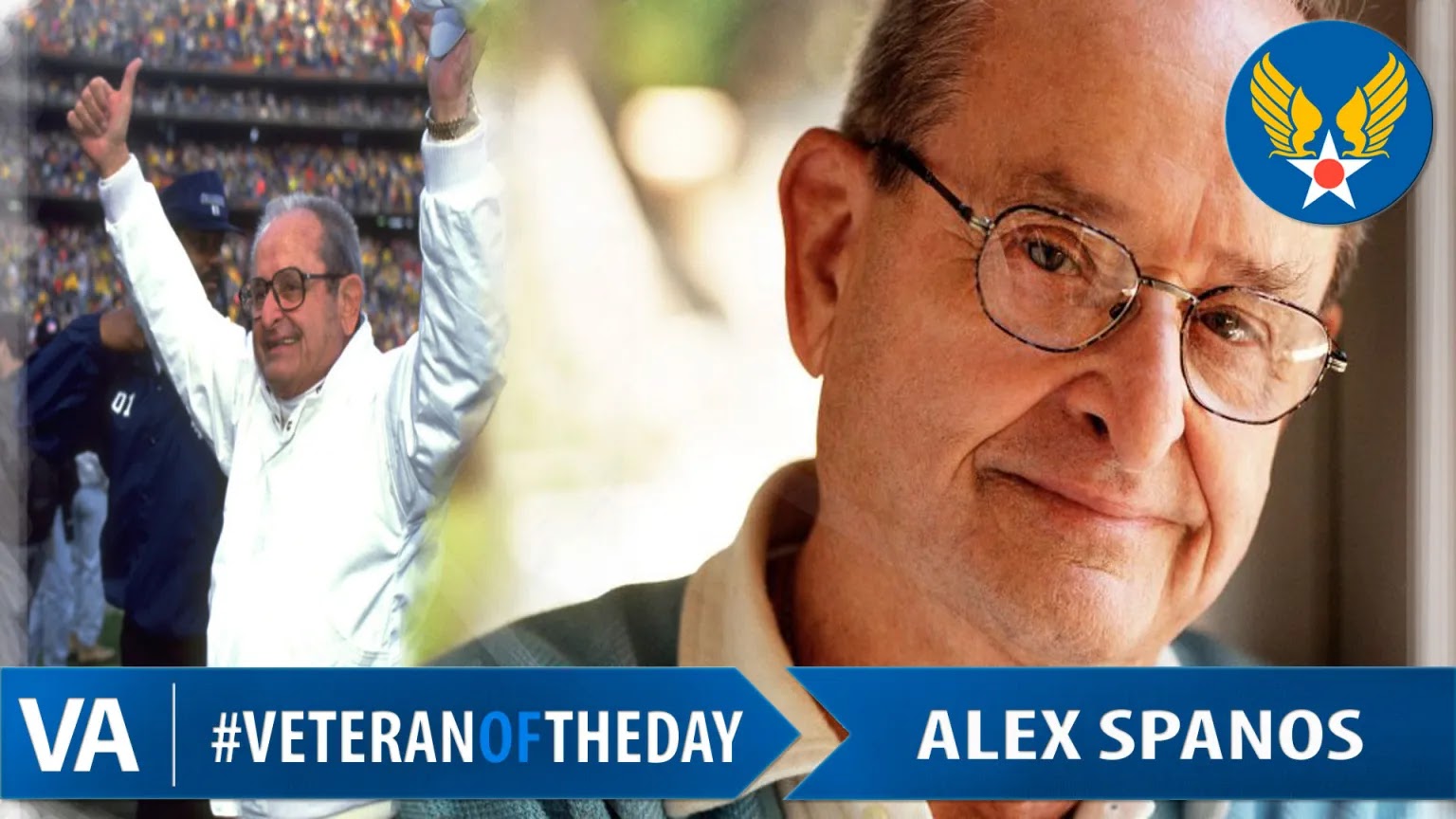
The Extraordinary Life of Senior DeMolay Alexander Spanos: From WWII Tail Gunner to Billionaire

Alex Spanos demolay
The story of Alex Spanos is a remarkable journey of triumph against adversity, an embodiment of the American dream. Beyond his role as a billionaire philanthropist, Alex Spanos was a WWII tail gunner, whose wartime experiences played a significant role in shaping his character and resilience. Born in modest circumstances to Greek immigrant parents, Spanos' life exemplifies the transformative power of determination, leadership, and the unwavering commitment to service instilled in him as a member of the Order of DeMolay.

Early Life and DeMolay Experience

Born on September 28, 1923, in Stockton, California, Alex Spanos grew up during the challenging era of the Great Depression. From a young age, he learned the values of hard work, perseverance, and community support, which would prove invaluable throughout his life. Spanos' journey towards greatness began when he joined the Order of DeMolay, a Masonic youth organization dedicated to cultivating leadership skills and moral character in young men.

As a DeMolay member in Stockton, Spanos embraced the organization's core values, which would lay the foundation for his future success. His involvement in DeMolay sharpened his public speaking skills, emphasized the importance of teamwork, and instilled a strong sense of ethics and responsibility. These qualities would prove instrumental as he embarked on his journey beyond the organization.

Wartime Service as a Tail Gunner

Upon the outbreak of World War II, Alex Spanos answered the call to serve his country. Enlisting in the armed forces, he joined the United States Army Air Forces and served as a tail gunner aboard a B-29 bomber. The role of a tail gunner was one of immense courage and responsibility, as they defended the aircraft against enemy fighters during bombing missions.

Spanos' service as a tail gunner exposed him to the harsh realities of war and demanded unwavering courage in the face of danger. His wartime experiences forged a profound sense of resilience, determination, and camaraderie with his fellow servicemen. The lessons learned during his time as a tail gunner would serve as a testament to his strength of character and indomitable spirit in the years to come.

Building a Business Empire and Philanthropic Legacy

Following his return from WWII, Alex Spanos channeled his determination and work ethic into the business world. He began in the bakery business but quickly transitioned to real estate development, founding the A.G. Spanos Companies. Under his visionary leadership, the company grew into one of the most prominent real estate development firms in the United States.

Spanos' success allowed him to achieve billionaire status, but he never forgot the values he had learned as a DeMolay member and as a tail gunner. Alongside his business accomplishments, he dedicated his life to philanthropy, contributing generously to charitable causes, educational institutions, and community organizations. His philanthropic legacy extended to sports, where he purchased the San Diego Chargers and became a prominent supporter of youth sports programs.

Conclusion

Alex Spanos' extraordinary life journey, from a young DeMolay member to a billionaire philanthropist and WWII tail gunner, reflects the indomitable spirit of those who overcome adversity and serve their communities. His role as a tail gunner in WWII exemplifies his courage and commitment to defending his country, while his DeMolay experiences instilled in him the values of leadership and character.

Through his business success and philanthropic endeavors, Alex Spanos made a lasting impact on countless lives and communities. His story is a testament to the enduring influence of organizations like DeMolay and the profound impact of wartime service. Alex Spanos will always be remembered as a true American hero, a dedicated philanthropist, and a symbol of resilience and leadership.

Knights Templar's Code of Chivalry and DeMolay's Values: An Analysis

The Templar Code of Chivalry and the Seven Precepts of the Order of DeMolay share common themes of ethics, values, and principles, despite o...